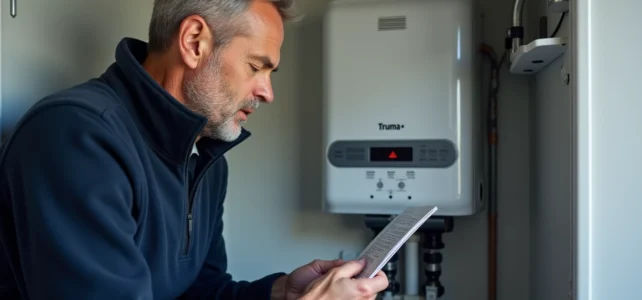
An error code Truma displayed on the CP Plus panel does not indicate a general failure: it points to a specific component, circuit, or operating threshold. Reading this code correctly avoids replacing a part that is still functioning or wasting time on a wild goose chase. Here, we detail the diagnostic mechanisms that public-facing documents only skim over.
Prefix W and Prefix E on CP Plus Panel: Two Distinct Levels of Severity
On newer Truma CP Plus panels, the prefix of the code determines the procedure to follow. W (Warning) signals a reversible anomaly. The heating can restart after correcting the cause and a simple reset. E (Error) locks the Combi and indicates a hardware fault that, according to Truma workshop procedures, requires the replacement of a component.
This distinction radically changes the diagnostic approach. When faced with a W code, we first look for an external cause (gas supply, battery voltage, connections). When faced with an E code, we directly proceed to disassemble the designated component.
To consult the complete list of Truma error codes with the correspondence between prefix and corrective action, a structured reference table remains the best tool before any intervention.
Most Common E Codes in the Workshop
E133H indicates a short circuit on the combustion air motor. The wiring should be checked first, but in most cases, the motor itself is at fault. E515H points to insufficient rotation speed of the same motor, which often confirms advanced mechanical wear.
These two codes lock the Combi until the part is replaced. A reset alone is not enough, even if the display seems to return to normal for a few seconds.
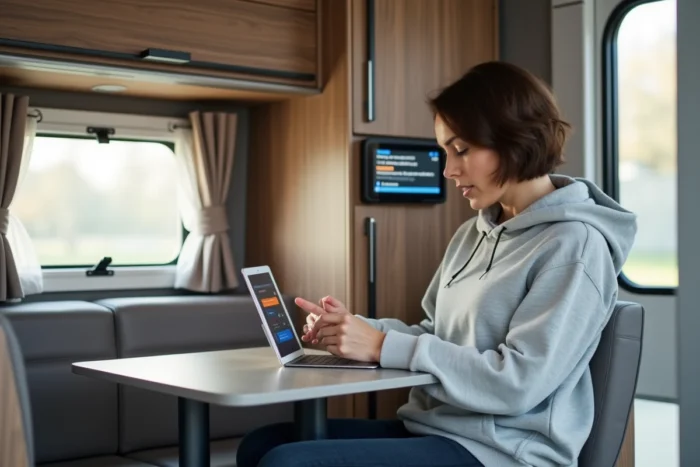
Truma Error Codes Related to Power Supply: W255H, W517H, and E122H
Truma now associates the codes W255H and W517H with unstable power supply issues, rather than internal failures of the Combi. This reclassification changes the intervention logic.
W255H indicates a low voltage from the service battery. Before suspecting the heating, we recommend measuring the voltage directly at the Combi terminals (not on the dashboard), checking the fuses dedicated to the heating circuit, and inspecting the wire sections. An undersized cable or a corroded terminal is enough to trigger this code.
W517H signals a lack of flame detection. The most common cause is not an ignition fault but an interruption in the gas supply: empty bottle, closed valve, or stuck regulator. Before any intervention on the ionization electrode, systematically check the gas chain upstream.
E122H After Modification of the Gas Circuit
The code E122H deserves special attention. It indicates an interruption of fuel supply (gas or diesel depending on the version). Field feedback shows that this fault frequently occurs after circuit modifications:
- Changing the pressure regulator without checking the residual flow
- Adding an additional filter that creates excessive pressure loss
- Switching from one type of gas to another (propane/butane) without adapting the regulator
A complete check of the supply chain must precede any intervention on the Combi itself when this code appears after a recent modification.
Truma Reset: When It Solves the Problem and When It Masks It
The reset procedure is the first reaction of most users when faced with an error code. For a W code, this is legitimate: the reset clears the alert once the cause is corrected. For an E code, the reset only temporarily restarts the startup cycle before another lock occurs.
The distinction is simple: a W code that reappears after a reset indicates an uncorrected cause, not a fault of the reset. Reassess the diagnosis instead of resetting a second time.
Reset Procedure on CP Plus Panel and iNet Box
On the CP Plus panel, the reset is performed by a long press on the rotary/push button. The panel returns to the home screen and restarts the cycle. On systems equipped with an iNet Box, the reset can also be triggered from the mobile app, but the behavior is the same.
After a reset, observe the time before the code reappears. A code that returns in a few seconds points to a permanent fault (failed component or cut wiring). A code that returns after several minutes of operation indicates an intermittent problem, often related to temperature or vibrations.
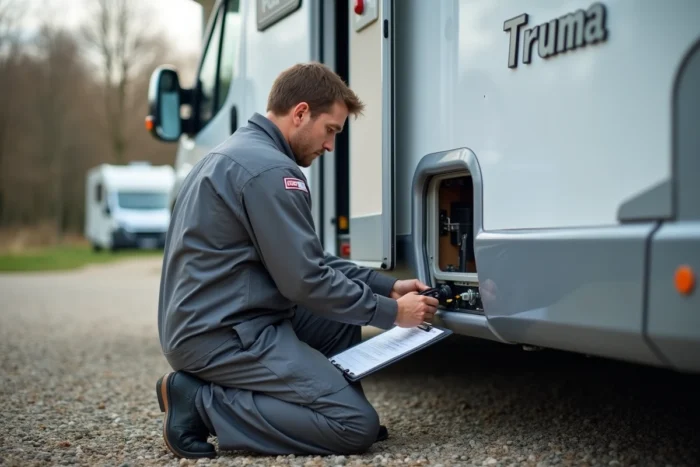
Field Diagnosis: Checks to Make Before Contacting a Truma Workshop
Before immobilizing the vehicle at an authorized repairer, a few checks can eliminate the most common causes and arrive with a usable pre-diagnosis.
- Record the exact code displayed, including the prefix (W or E), and note the suffix H if present, as it identifies the concerned circuit (heating)
- Measure the service battery voltage under load and at rest, directly on the Combi wiring
- Visually check the connectors of the harness between the control panel and the Combi, looking for signs of oxidation or overheating
- Test the gas supply on another appliance in the circuit (cooking plate, refrigerator) to isolate a gas chain problem
These four steps eliminate the majority of false failures. A certified Truma technician receiving a vehicle with this data saves time and reduces the cost of intervention, as the diagnostic charged in the workshop starts exactly where you left off.
The behavior of the Combi after a reset remains the most reliable indicator to guide the diagnosis. A corrected W code that does not return confirms that the intervention was correct. A persistent E code after replacing the designated component should alert to a possible upstream wiring fault, rather than a defective replacement part.