The leisure market is segmenting faster than operators anticipate. New leisure trends, hybrid formats, regulatory pressure on free time: we have been observing signals for several months that are reshaping the landscape of available activities and how audiences engage with them.
European Directive on Disconnection: a legal framework that restructures free time
The European Parliament adopted a “Right to Disconnect” directive in the summer of 2026, granting employees in the 27 member states the right not to respond to work communications outside of contractual hours, without repercussions on their careers. Employers will need to negotiate disconnection protocols with employee representatives beyond a certain threshold of staff.
The transposition into national law is expected by the end of 2027 for all member countries. This timeline concerns approximately 160 million European employees. Luxembourg has already taken an additional step: since July 2026, the Labor Inspectorate has been empowered to sanction non-compliance with the law of June 28, 2023, on disconnection.
The impact on the leisure sector is direct. A better-defined work-free time boundary frees up predictable time slots. We recommend urban leisure operators (escape rooms, creative workshops, indoor parks) to adjust their opening hours in the evenings and on weekends to capture this structurally enhanced demand. Following leisure on Officiel News allows you to spot the rising formats as this regulatory framework unfolds.
Escape room, creator workshops, and immersive visits: what drives growth
Three segments concentrate the majority of growth in experiential leisure: scripted escape rooms, workshops led by independent creators, and augmented reality tours.
Next-generation escape rooms
The padlock escape room model has become outdated. The rooms that are thriving incorporate hybrid game mechanics (live actors, sensory devices, branching scenarios). The revisit rate increases when the experience is never the same from one session to another, which drives operators to invest in modular scripts rather than fixed decor.
Creator-led workshops
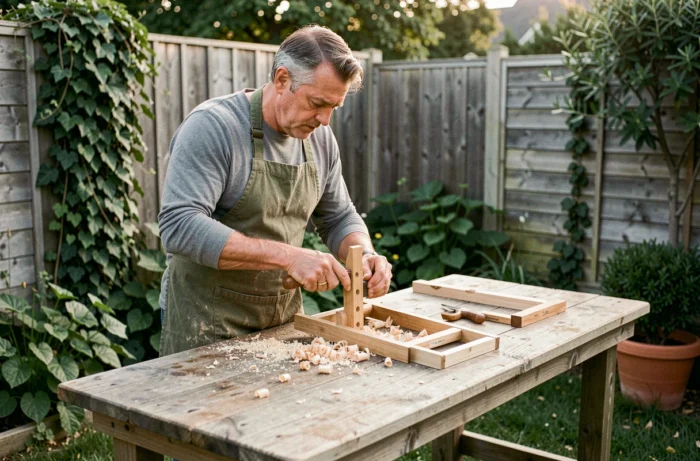
Craft fairs and artisan markets have migrated to a participatory format. Rather than a simple sale, the workshop becomes the main product. Ceramics, bookbinding, natural dyeing: each activity creates an object that the participant takes home, justifying a higher average ticket price than an online course.
The winning positioning relies on the rarity of the transmitted know-how. A Japanese lacquer workshop attracts a different audience than a generic pottery class, and its limited capacity (four to six spots) enhances perceived value.
Immersive urban visits
Augmented tours in city centers are multiplying. They combine geolocation, audio narration, and visual overlays on smartphones. For local authorities, this is a lever for heritage enhancement at a moderate cost. For visitors, it’s an outdoor activity that is not dependent on the weather or a reservation slot.
Selection of high-potential activities for the upcoming season
We identify several formats that meet current market expectations without reproducing saturated patterns. Here are the selection criteria we apply:
- Affordable pricing: an entry ticket lower than the cost of a restaurant outing for one person, so as not to filter the audience by price
- Integrated social component: the activity is practiced with others without requiring a pre-formed group (friendly bets on outcomes, cooperation in pairs)
- Residual value: the participant leaves with an object, a skill, or digital content that they can extend at home
Based on this, the indoor leisure park with modular courses represents a relevant investment for operators. Evolving configurations (reconfigurable climbing walls, interchangeable virtual reality circuits) allow for renewing the offer without heavy construction.
Digital leisure and physical leisure: convergence accelerates
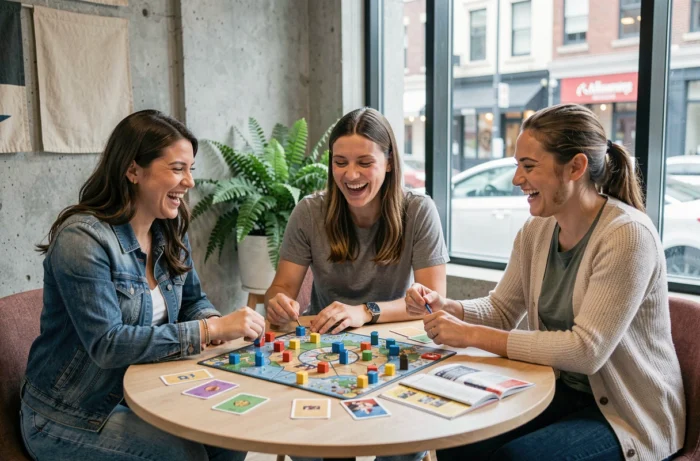
The separation between online activity and in-person activity is no longer operationally relevant. A board game café now integrates a companion app that manages scoring and offers real-time variations. A cooking workshop extends with access to a platform of personalized recipes.
Hybrid leisure generates measurable post-visit engagement. Operators who collect usage data on the digital part adjust their physical programming accordingly. It’s a virtuous circle: in-person activity feeds online usage, which in turn brings the participant back in person.
We also observe the emergence of formats for AI-assisted creation in public workshops. Image generation, guided music composition, collaborative writing: these tools do not replace the artisanal gesture but lower the entry barrier for audiences who would not have crossed the threshold of a traditional workshop.
Structured free time: a market that is professionalizing
The leisure sector is gradually moving away from an artisanal logic. Online booking tools, dynamic pricing management, and attendance flow analysis are transforming the management of a park or event hall. Margins are now determined by the occupancy rate per time slot, not just by the annual visitor volume.
The European directive on disconnection will amplify this trend. Better-defined free time slots create more concentrated demand for certain periods. Operators who can smooth this demand through differentiated pricing and tailored programming will gain a structural advantage over their competitors.
Leisure is no longer a supplementary sector. It is a market in its own right, with its regulatory constraints, innovation cycles, and profitability requirements per square meter. Those who approach it with this framework are the ones who capture growth.