Organizing a family moment that leaves lasting memories relies neither on budget nor on destination. Spending unforgettable moments with family is more about the quality of shared attention, the choice of activities that break away from established routines, and a few structuring decisions that most guides overlook.
Nature micro-adventures with family: the game-changing format
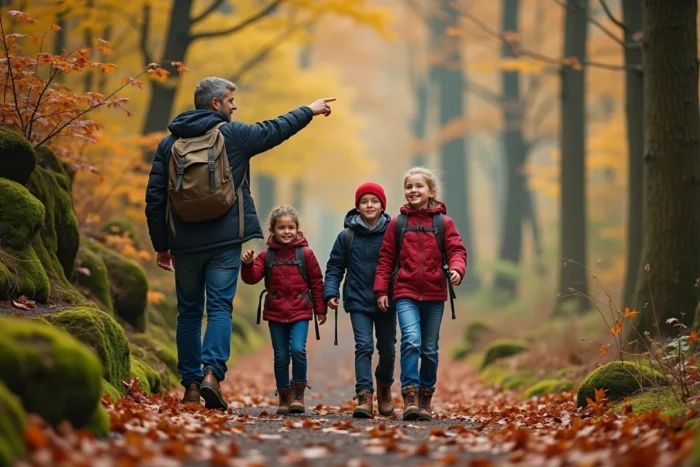
A micro-adventure means leaving on Friday evening, camping less than an hour from home, and returning by Sunday noon. This short format eliminates the logistical fatigue of long journeys while creating a real change of scenery without heavy planning. Children remember the experience of a campfire or a night under a tent much longer than a day at an amusement park.
We recommend choosing a nearby natural site, ideally in a state forest where camping is still tolerated between sunset and sunrise. The idea is not to hike for miles, but to slow down: observe animal tracks, cook on a stove, listen to nighttime sounds. To delve deeper into this type of approach and find other formats suitable for children, Mr. Seb’s family page details several concrete scenarios based on age.
The family nature and ecology trend is no longer just a marketing argument. Organizations like France Nature Environnement offer free educational tools to transform a forest outing into an environmental education workshop. A child who identifies three species of trees during a walk retains the experience differently than by watching a documentary.
Family activities without screens: structuring time differently
Removing screens for an entire weekend only works if the alternative is prepared. Planning three to four activities per half-day is enough to maintain the pace without overloading the schedule. The classic trap is piling on too many activities, which generates frustration among younger ones when it’s time to move on.
Here are the formats that hold up over time, tested on children aged four to twelve:
- The home treasure hunt with written clues: each child prepares a course for another family member. The preparation takes as long as the game itself, effectively doubling the actual activity time.
- The collaborative cooking workshop where each participant manages a station (starter, main course, dessert). The result matters less than the process: measuring, mixing, tasting together.
- The family time capsule: each member writes a letter, chooses an object, all sealed in a jar to be opened in five years. This ritual creates an emotional anchor that few activities can match.
The goal is not to keep the children occupied but to give them responsibility in the activity. A child who organizes part of the program invests more than a child who is merely a spectator.
Family outings and access to leisure places: what changes in 2026
A topic rarely addressed in family outing guides concerns access to leisure spaces. The National Consultative Commission on Human Rights (CNCDH) issued an opinion in July 2026 recommending the prohibition of “No Kids” zones, spaces reserved exclusively for adults in certain accommodations and leisure venues.
If this recommendation leads to a binding text, families with children will gain access to places previously closed off: certain restaurants, hotel spas, quiet areas of campsites. For parents planning a stay or a weekend as a couple with children, this development deserves close attention.
Another regulatory point to watch: the bill on child protection presented in early July 2026 requires organizers of extracurricular activities to inform parents of the identity of all professionals supervising their children, with enhanced prefectural oversight. Concretely, this means that sports camps, summer camps, and creative workshops will need to provide increased transparency regarding supervision.
Family vacations in France: choosing the destination by activity, not the other way around
The majority of families first choose a destination and then look for things to do there. We observe that the reverse approach produces better memories. Starting from the desired activity to find the suitable location avoids disappointing compromises.
A concrete example: a family attracted to canoeing on calm rivers does not need to aim for the Gorges de l’Ardèche (summer overcrowding, intense heat). Category I rivers in Dordogne or Lot offer the same pleasure with fewer crowds and water sports bases that welcome children from five or six years old.
The same logic applies to urban getaways. Paris remains a top family destination, but a successful visit relies on a focused program. Two activities per day maximum, with integrated free time, allow children to enjoy without overwhelming them. Nature outings on the outskirts of the capital (Fontainebleau forest, banks of the Marne) complement an urban stay well.
Family evening at home: going beyond Saturday night movies
The typical family evening often revolves around a movie and popcorn. This format works, but it quickly wears thin. To refresh the ritual without complicating it, a few simple variations produce a disproportionate effect.
- The “restaurant at home” evening: tablecloth, candles, handwritten menu, service provided by the children in turn. The setting transforms an ordinary meal into an event.
- The board game tournament in three rounds with a small symbolic trophy. Light competition creates intensity and anecdotes that last.
- The storytelling evening where each participant shares a family memory, real or embellished. Children love hearing stories about their parents as kids.
The common thread of all these ideas remains the same: giving each family member an active role and limiting passivity. Unforgettable moments rarely arise in front of a shared screen, but almost always in an interaction where everyone contributes.