The leisure market in France is undergoing a transformation that generalist lists do not capture. The rental of outdoor equipment is moving upmarket towards technical practices (gravel, kayaking, enduro mountain biking), reservations are being made massively the day before or on the same day via mobile, and analog creative hobbies are regaining ground against the all-digital trend. Spending one’s free time is no longer just about choosing between Netflix and hiking: it is a trade-off between spontaneity, technicality, and sensory engagement.
Technical outdoor rental: the leisure that replaces purchase
The clearest trend of summer 2026, according to the Lokki Observatory cited by Sport Stratégies, concerns the upscale rental of sports equipment. City bikes are declining in favor of mountain bikes, gravel bikes, and road bikes. Kayaking and paddleboarding are following the same trajectory.
This shift changes the way one approaches a new hobby. Rather than investing several hundred euros in equipment that one is unsure will be enjoyable, renting allows one to test a technical practice without financial commitment. A weekend on a rented gravel bike is enough to know if one wants to continue.
We observe that this rental logic is accompanied by a much more opportunistic approach to free time. The majority of outdoor reservations are now made the day before or on the same day, primarily via mobile. Decisions are made based on the weather, mood, and available time slots. The varied activity catalogs, like those found on leblogdebango.fr loisirs, reflect this diversification of possible daily practices.
For those looking to renew their leisure activities, the most productive approach is to identify local specialized rental companies (not just the big chains) that offer recent equipment suitable for beginner-intermediate levels.
Analog creative hobbies: why the return to paper and material works
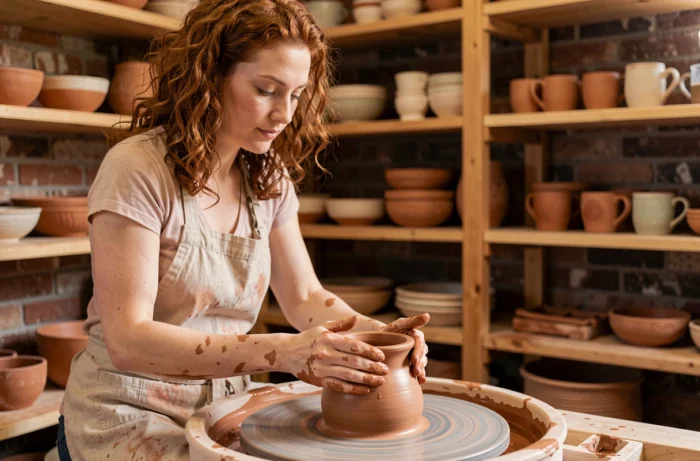
Manual practices are experiencing a measurable resurgence, driven by fatigue from screen time. Pottery, bookbinding, linocut, contemporary embroidery, leatherwork: these activities share a common technical aspect that is often underestimated.
They require learning through action, which cannot be shortened by a three-minute tutorial. The progression curve is slow, visible, and physical. This is precisely what keeps practitioners engaged, where a digital hobby can become tiresome in just a few weeks.
Criteria for choosing a sustainable creative hobby
- The actual entry cost: some practices like linocut require a low-cost starter kit (gouges, ink, paper), while ceramics require access to a kiln, thus a shared studio
- The availability of local group classes: a creative hobby practiced alone at home tires out faster than in a workshop, where emulation and technical feedback accelerate progress
- The relationship to the outcome: embroidery or travel journals produce finished objects quickly, which maintains motivation during the initial weeks
Pinterest reported in the fall of 2026 an increase in searches related to manual hobbies and seasonal creative activities. This is not a passing trend: the need to create something tangible with one’s hands responds to documented cognitive saturation.
Back-to-school sports activities: going beyond the gym
Club registrations explode every September, but dropouts follow as early as November. We recommend targeting disciplines where the social component or variety of courses prevents routine.
Indoor climbing remains the best engagement-progression ratio for a beginner. Each session offers different problems, the community naturally corrects technical errors, and progress is measured in climbing route colors. Club badminton offers a similar advantage: low risk of injury, adjustable intensity, and the doubles format encourages social interaction.
Three underrated disciplines to try through rental or trial classes
- Archery: accessible from the first session, clubs generally provide equipment, and the concentration required makes it a remarkably effective anti-stress hobby
- Swing dance (lindy hop, balboa): unlike classic ballroom dances, improvisation is central, renewing each class
- Canoeing-kayaking on calm water: ideal for residents near a body of water, with discovery slots often offered by municipal water sports centers
The classic trap is to sign up for an activity because it is trendy. It is better to choose a slightly offbeat hobby that matches one’s lifestyle than a popular sport abandoned after six sessions.
Learning a language or an instrument: structuring free time differently
Learning hobbies (foreign language, musical instrument, technical photography) operate on a different principle than physical or creative activities. Their value increases with regularity, not intensity.
Spending twenty minutes daily on an instrument yields significantly better results than a two-hour weekly session. It is a hobby that structures free time rather than simply filling it.
For photography, the most formative approach remains to set technical constraints (a single focal length, black and white only, one theme per week) rather than multiplying shots without direction. In-person classes, in a lab or a local photography club, provide a rigor that online tutorials cannot replace.
Choosing a learning hobby commits one for several months, making it complementary to a more spontaneous sports or manual activity. Combining both types covers the immediate need for disconnection and the long-term need for progress.
The leisure offering has never been so fragmented or so accessible last minute. The real filter remains personal: do you prefer to create, move, or learn? Answering this question before consulting an activity catalog avoids dispersion and early dropouts that characterize each new season.