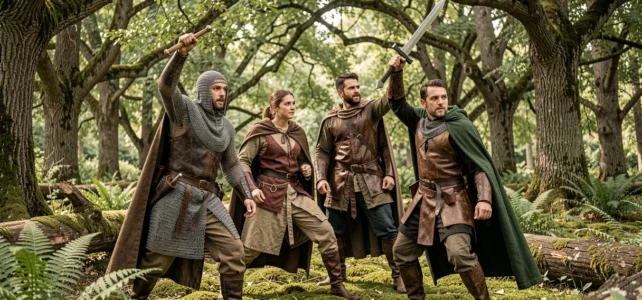
You have already put on a costume for a costume party. Now imagine that this costume becomes your identity for several hours, in a forest, a castle, or a field in the countryside. Live action role-playing (LARP) takes this idea to the extreme: each player embodies a character, interacts with others, and advances a collective story without screens or controllers.
What distinguishes a LARP from an escape game or a murder mystery party
LARP is often confused with other playful formats. The difference lies in one specific point: the player’s freedom of action.
In an escape game, you solve puzzles in a more or less predetermined order. In a murder party, you follow a written scenario with programmed twists. In LARP, the scenario evolves according to the decisions of each participant. A player can betray their faction, negotiate an unexpected alliance, or flee a fight to save a secondary character.
This freedom relies on a framework: the rules of the game. Each LARP defines a system that manages combat (foam weapons, symbolic throws, skill cards), magic, diplomacy, and sometimes the economy of the fictional world. The starter kit provided to players typically includes the character sheet, basic rules, and information about the universe.
Francophone organizers offer formats suitable for all levels, including for a first experience. Some events listed on aventureslegendaires.be allow you to discover LARP in a structured setting, with costume rentals and support for beginners.
Outdoor LARP: a format established in the landscape of immersive leisure
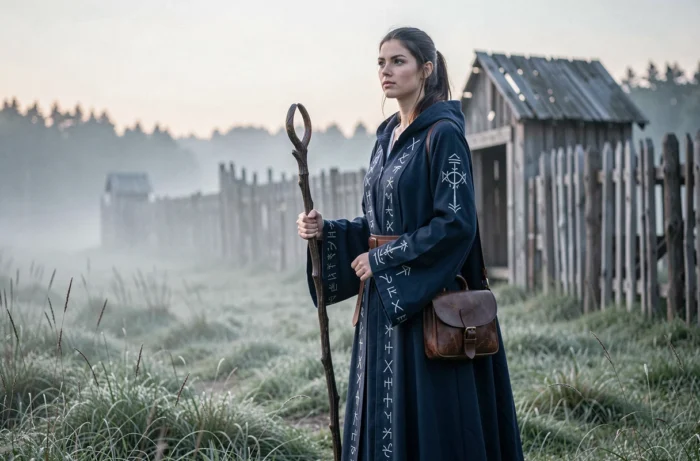
For a few years now, LARP is no longer confined to a niche audience. Leisure and event industry players now place it alongside outdoor escape games and scripted treasure hunts as an integral component of the open-air immersive experience market.
Why this expansion? Several factors come into play.
- The post-Covid demand for outdoor, collective, and screen-free activities has directly benefited LARP, which ticks all these boxes.
- Local authorities and youth animation structures are incorporating LARP into their summer programs, making it visible to audiences who would never have stepped into a role-playing association.
- Companies use LARP as a team-building tool to work on cooperation, communication, and decision-making in fictional situations, far removed from the image of the medieval dungeon.
Thus, LARP today reaches players, but also employees, families, and teenagers in leisure centers.
Building a LARP character: the aspect that beginners underestimate
Many new players focus their preparation on the costume. The medieval tabard, the cape, fantasy accessories. It’s visible and rewarding, but it’s not what makes the experience memorable.
A LARP character functions based on their motivations, not their appearance. Before choosing an outfit, you need to answer a few simple questions: what does my character want? What do they refuse? Who are their allies and enemies in the fictional world?
Organizers often provide a background (a history of the character in the game universe). This text, sometimes several pages long, gives objectives, secrets, and relationships with other characters. Reading it carefully radically changes the quality of immersion.
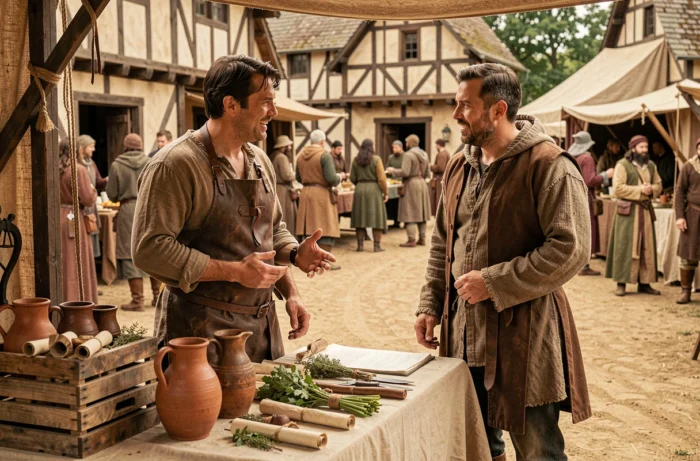
A practical tip: write down three objectives on a small card slipped into your pocket. In the heat of the game, when the action speeds up, this reminder helps avoid “breaking character” to wonder what you are supposed to do.
Combat rules and safety in LARP
Most LARPs use approved foam weapons, designed to cushion blows. Each event sets its own hit rules (allowed zones, limited striking force, keywords to signal a real problem).
Players learn these rules during a mandatory briefing before the game starts. This moment should be taken seriously: it ensures that everyone shares the same framework, including each person’s physical and emotional limits.
Choosing your first LARP: fantasy, horror, or historical universe
The Francophone offer covers a wide spectrum. Medieval fantasy remains the dominant genre, with worlds populated by elves, dwarves, and wizards. But other universes exist and attract different profiles.
- Horror LARPs focus on atmosphere: nighttime play, minimal lighting, scenarios inspired by gothic or Lovecraftian genres. They suit players looking for strong narrative tension.
- Historical LARPs (World War II, Viking era, Renaissance) attract reenactment enthusiasts who appreciate the rigor of costumes and settings.
- Short formats (a few hours, in urban settings) allow you to test LARP without investing an entire weekend or buying equipment.
Before signing up, check the expected number of players, duration, site comfort level (wild camping or solid accommodation), and the rules system used. This information is available in the event sheet or in the rulebook provided by the organizers.
LARP remains one of the few leisure formats where each participant collectively creates the story they experience. No session is like the previous one, even with the same scenario and the same setting. What changes everything are the players’ choices, their alliances, their betrayals, and the unforeseen events that no one, not even the organizer, had anticipated.