The fashion trends of this season are reflected as much in the choice of materials and cuts as in the way they are produced and consumed. Between technical textiles, narrowed color palettes, and AI-driven customization tools, the wardrobe is evolving along axes that mainstream guides barely touch upon.
Smart textiles and enhanced comfort: materials that redefine the look
The demand for thermo-regulating and hybrid loungewear-tailoring clothing now structures the collections. Shape-memory fibers, breathable technical knits, and fabrics with integrated sensors are no longer confined to sportswear. We are observing their migration towards everyday wardrobe pieces: climate-lined blazers, technical jersey dresses, and fluid pants with moisture-wicking properties.
This shift has a direct impact on style. A technical knit dress falls differently than a classic viscose dress. The cuts adapt to the constraints of the textile, not the other way around. Brands that master this parameter offer sharper silhouettes, with less ironing and better longevity.
The key point to watch remains the touch. A poorly calibrated smart fabric gives an unflattering plastic look. We recommend prioritizing pieces where the technical fiber is blended with cotton or linen to maintain a natural drape.
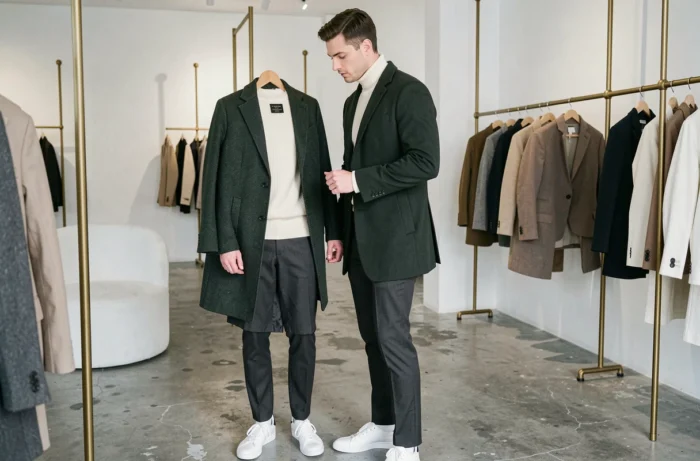
AI customization and style recommendations: what is changing concretely
Almost all online fashion platforms now integrate AI-driven recommendation systems. Suggestions are no longer limited to size or price: they compose complete looks based on a user brief (occasions, body type, preferred color palette).
Some platforms are testing on-demand piece generation, where the garment only exists after client approval. The stated goal is to reduce overproduction and unsold items, a lever that specialized resources like blog2mode.com regularly document in their analyses of new shopping practices.
Generative AI now co-creates collections with clients, incorporating style, lifestyle, and occasion parameters. The result: more targeted pieces, adjusted quantities, and a wardrobe that better reflects actual uses than the projections of an isolated artistic director.
Narrowed color palette: burgundy, chocolate, and warm neutrals
The standout colors of the season are not surprising for their boldness but for their coherence. Burgundy emerges as the dominant shade, appearing across all materials, from leather to jersey to thick knits.
Chocolate, ecru, and khaki function as the new neutrals of the autumn wardrobe. Their technical advantage: they pair well without creating dissonance, simplifying the construction of a stylish look without multiplying pieces. A chocolate pant, an ecru sweater, and a khaki jacket form a base that can be worn five days without becoming tiresome.
- Burgundy works as a statement piece (dress, blazer, bag) and replaces black in formal outfits without its severity
- Chocolate substitutes classic camel with a denser finish, suitable for thick mid-season materials
- Ecru brings brightness without the “too summery” effect of pure white, particularly effective in knit or heavy linen
- Khaki, worn in a faded or satin finish, breaks the monotony of warm tones and introduces a utilitarian note
Prints: leopard and graphic patterns
Leopard returns with a strong presence, but its use has changed. It is found on structured pieces (trench, midi skirt) rather than on accessories. A leopard print on a simple cut neutralizes the “too busy” effect and adds character to a neutral palette.
Geometric patterns and wide stripes complement the offering, mainly on shirts and blouses. They allow for enlivening a monochrome look without resorting to bright colors.
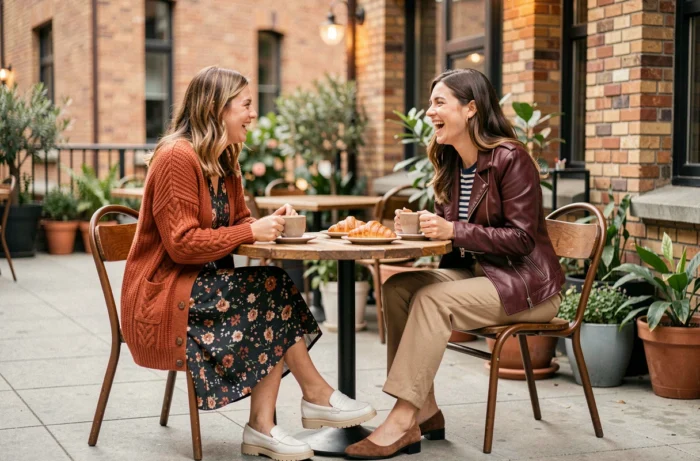
Preferred cuts and pieces: blazer, straight jeans, and midi dress
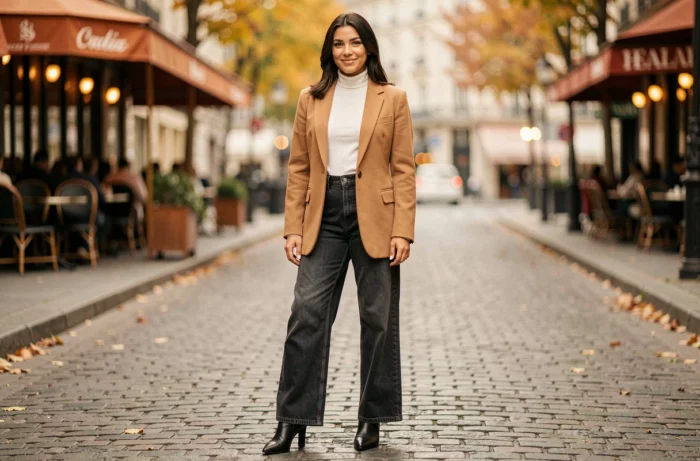
The blazer remains the most versatile piece of the season. Slightly oversized, with structured but not rigid shoulders, it works well over jeans or a dress. We recommend choosing it in a slightly textured material (flannel, thick crepe) rather than smooth fabric to avoid a corporate look.
Straight jeans are gradually replacing wide barrel cuts. Its silhouette elongates the leg without the sometimes difficult volume effect of ultra-wide cuts. In raw or slightly faded denim, it adapts to all tops of the season.
The midi dress in knit or technical jersey concentrates the two current trends: enhanced comfort and neutral palette. Worn with low-heeled boots, it creates a complete look in a single piece.
Second-hand and responsible fashion: a reflex that has become structural
Among 25-34 year-olds, the majority have purchased at least one responsible or second-hand item in the past two years. It is no longer a militant gesture but a shopping reflex. Reselling and renting are becoming concrete levers for refreshing a look without accumulating.
- Buying a trendy piece (burgundy blazer, midi dress) second-hand reduces the entry cost and limits the impact if the trend fades
- Renting statement pieces (leather coat, designer bag) allows testing a style without commitment
- Reselling pieces from the previous season partially finances new acquisitions and maintains a streamlined wardrobe
Leather illustrates this tension well. Gen Z expresses sometimes contradictory expectations: attraction to leather as a noble and durable material, but reluctance related to its animal origin. Alternatives in plant-based leather are progressing, but their actual durability varies significantly depending on manufacturing processes. Checking the exact composition of a plant-based leather remains the only way to avoid a disappointing purchase.
The stylish look of this season does not rely on the accumulation of trendy pieces but on the coherence between materials, cuts, and palette. A wardrobe of five to seven well-chosen pieces, in burgundy-chocolate-ecru tones, in quality technical or natural materials, covers most situations of the fall.