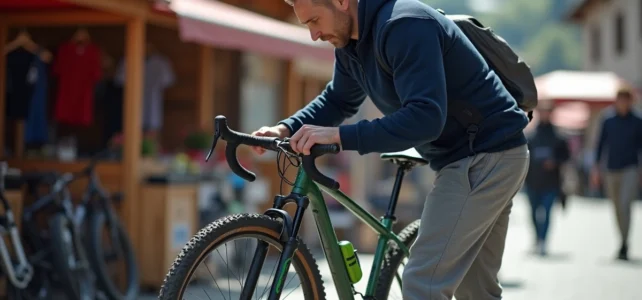
A road bike in a Vaud garage, hiking shoes worn twice in Zermatt, a home trainer bought during lockdown: Switzerland is full of sports equipment waiting for a second owner. The second-hand sports market operates differently from the rest of Europe, with its own platforms, pricing habits in CHF, and tax rules that many sellers are unaware of.
Swiss Taxation and Reselling Sports Equipment: The Trap for Regular Sellers
Do you sell your old trail shoes once a year on Ricardo? No problem. Do you buy second-hand bikes to refurbish and resell each month? The Swiss tax authorities might see things differently.
Tax scrutiny on recurring sales through online platforms (Ricardo, Tutti, Anibis, Vinted) has tightened in recent years. Authorities now examine several criteria to distinguish an individual from a micro-entrepreneur: the frequency of sales, the intent to buy-resell, and the recurrence of financial flows on the same account.
In practical terms, if you buy second-hand fitness or mountain equipment with the intention of reselling it for a profit, and this pattern repeats, you risk being reclassified as an independent activity. The consequences affect both income tax and social contributions. Regular buyers-resellers of sports equipment in Switzerland benefit from documenting their transactions and consulting a fiduciary as soon as their activity grows.
The Swiss second-hand sports market is organized around several channels, some of which are specialized by discipline. You can find both general listings and stores dedicated to skiing, fitness, or cycling, like on https://azsport.ch/, which offers a wide selection of sports items.
Second-Hand Fitness Equipment in Switzerland: The Standard That No One Checks
Buying a second-hand treadmill or weight bench to equip a professional gym is not the same as setting it up at home. Industry experts emphasize a technical point often overlooked: compliance with the EN ISO 20957 standard for commercial use.
This standard distinguishes devices designed for home use from those certified for intensive gym use. An elliptical bike sold as “professional” in a classified ad may not necessarily meet regulatory standards. For a fitness studio or community gym, purchasing second-hand equipment without verifying its usage class exposes you to insurance issues in case of an accident.
Checkpoints Before Buying Second-Hand Fitness Equipment
- Check the nameplate: it indicates the usage class (S for studio/commercial, H for domestic) and the normative reference
- Request the maintenance history, especially for cables, belts, and bearings that wear out over time
- Test the device under load: an abnormal noise or play in the joints indicates advanced wear
- Ensure that spare parts are still available from the manufacturer, or you risk ending up with an irreparable device
For personal home use, these precautions remain useful, but the normative question is less pressing. The real risk lies with devices whose parts are no longer manufactured, turning a good deal into cumbersome waste.
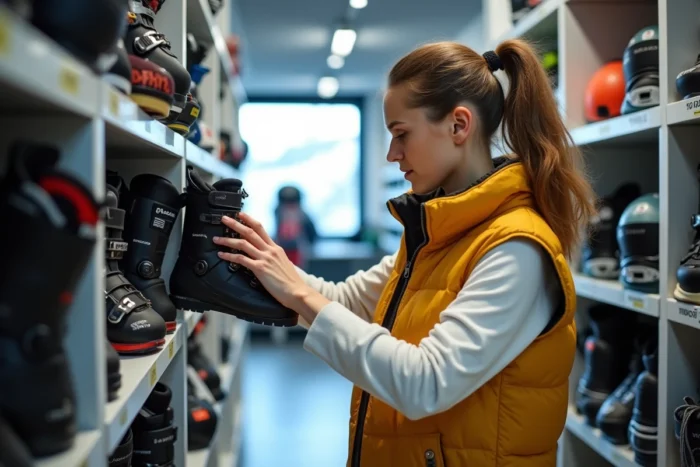
Second-Hand Skiing and Hiking in Switzerland: What Ages Well and What Doesn’t Forgive
Mountain equipment represents a massive share of the second-hand market in Switzerland. Alpine skis, touring skis, shoes, poles, backpacks: everything can be resold. The relevant question is not “can you buy second-hand?” but rather “what truly withstands multiple lives?”
Skis and bindings do not age the same way. A well-maintained pair of skis can last for years. Bindings, on the other hand, incorporate safety mechanisms whose adjustment and reliability degrade over time. Specialty stores sometimes refuse to adjust bindings that are too old, rendering the whole setup unusable despite the skis being in good condition.
Hiking shoes pose another problem. The EVA midsole (the material that provides cushioning) compresses and hardens over time, even without use. A pair stored for three years in an attic may look visually new while having lost most of its cushioning and grip capabilities.
Mountain Equipment to Prefer or Avoid Second-Hand
- Good second-hand: alpine skis, poles, technical backpacks, Gore-Tex technical clothing (if the seams are intact)
- To examine closely: ski bindings (check the year of manufacture and compatibility), ski shoes (durable hard shell, compressible liner)
- Avoid unless very low price: hiking shoes over three years old, helmets after an impact, climbing ropes without known history
Prices in CHF and Negotiation: The Codes of the Swiss Second-Hand Sports Market
The Swiss second-hand market operates almost exclusively in CHF, including on cross-border platforms. The prices reflect local purchasing power: a second-hand road bike sells significantly more expensively in Switzerland than in France or Germany for an equivalent model.
This reality creates an opportunity for patient buyers. Comparing prices between Swiss listings and European platforms often allows for more effective negotiation. A seller on Tutti or Ricardo who sees their price exceeding that of the neighboring market is more likely to accept a reasonable offer.
Cash payments remain common for in-person transactions, but Twint transfers are becoming widespread. For high amounts (fitness equipment, high-end bikes), opting for a traceable payment method protects both parties in case of disputes over the condition of the equipment.
The Swiss second-hand sports equipment market matures each year. The best-served buyers are those who know the tax thresholds, check technical standards, and compare prices beyond cantonal borders. With well-stocked local platforms and a quality culture unique to Switzerland, finding reliable equipment at a good price remains quite accessible, provided you know where to look.